
Wagyuhof Genetics
Buy Wagyu Embryos
The fastest route to your own Fullblood herd
Currently 39 export-ready embryos from leading sire Homerun. Grade 1 & 2, 100% Fullblood, free of genetic defects, Herd Book Section A. Calves weigh only 25–32 kg at birth, so easy calving is the norm.
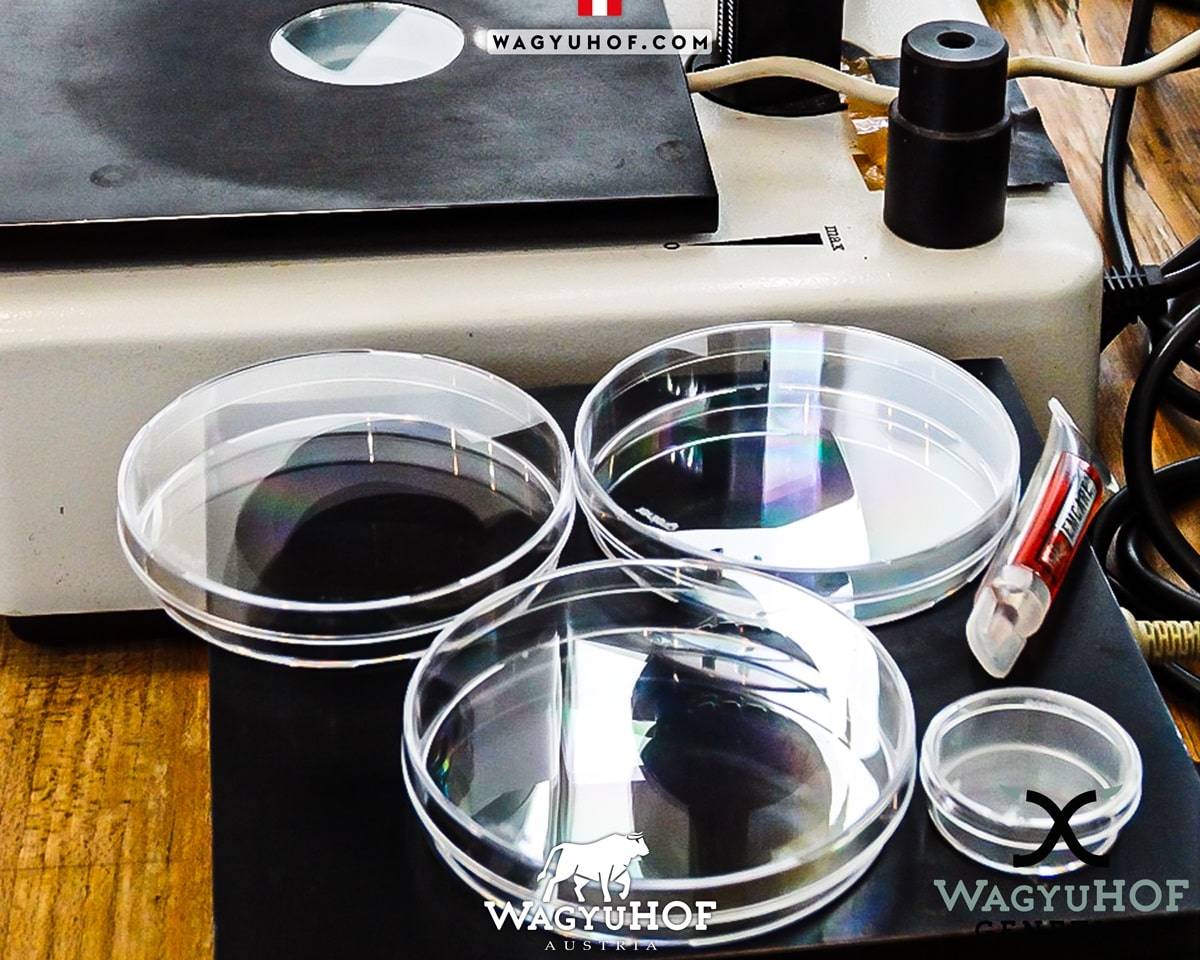
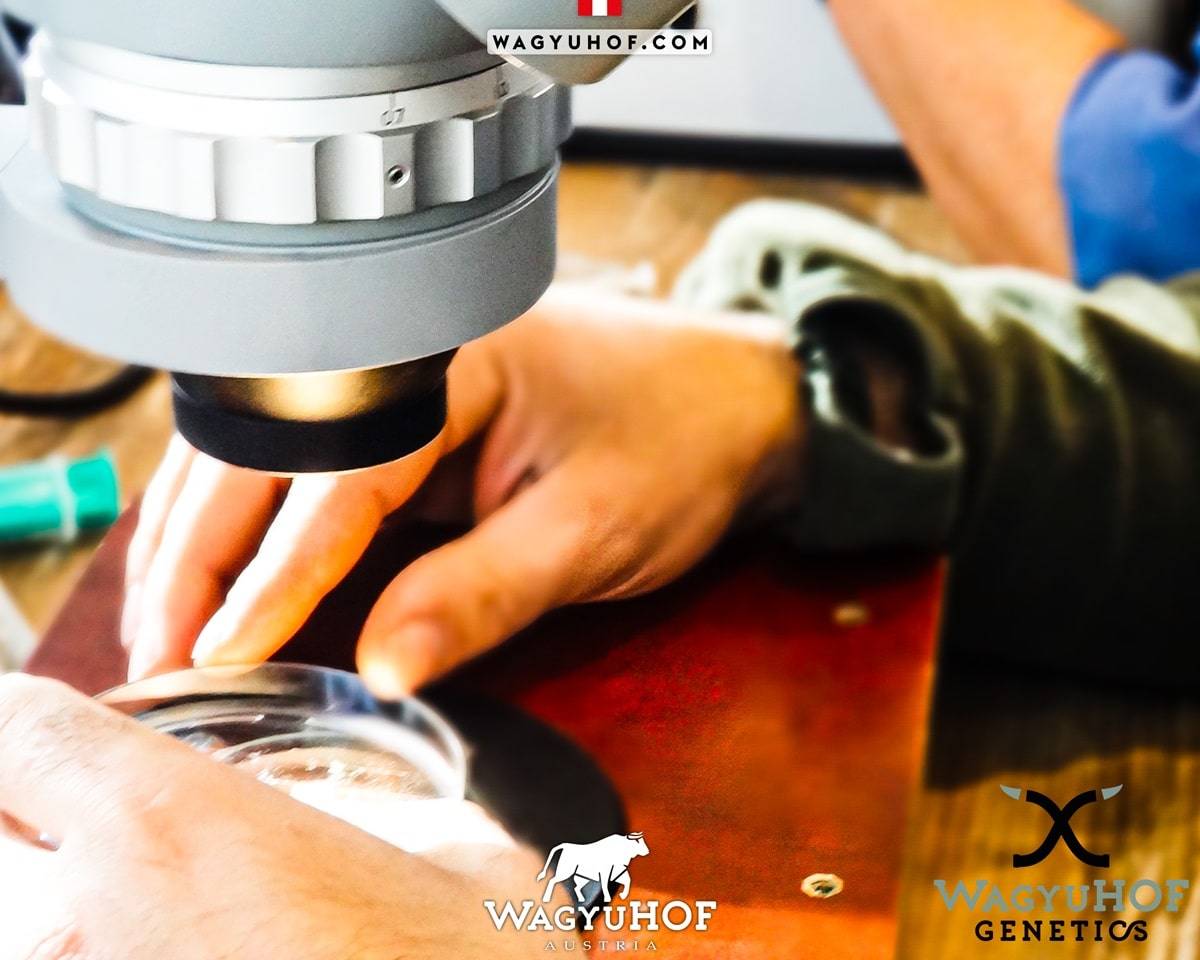
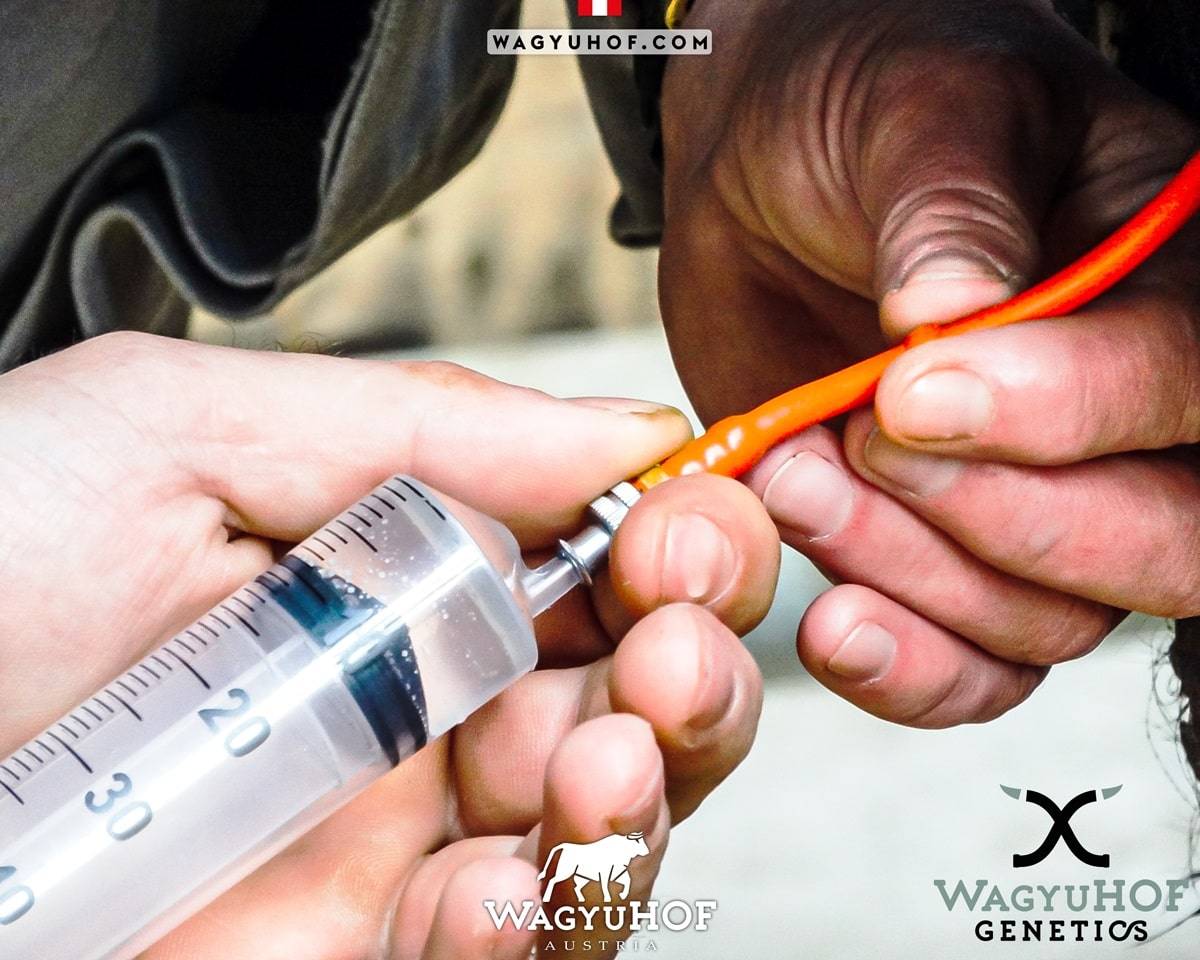
Why embryos rather than breeding animals?
The most economical entry into Wagyu breeding
Cheaper than livestock
An embryo costs a fraction of an in-calf heifer
Any breed as recipient
Your existing herd carries the Wagyu calves
Easy calving
25–32 kg birth weight instead of 40–50 kg in Simmental
Instantly 100% Fullblood
No grading-up over six generations
Herd book included
Offspring registered in Section A from day one
Support to pregnancy
We put you in touch with experienced ET vets
Advice & quote
We find the right mating for your breeding goal and prepare your quote including export.
🌍 Export EU-wide & worldwide via Genetic Austria
Currently available embryos
39 export-ready embryos from 7 matings · sire Homerun (Top 2% BFI Australia) · Grade 1 & 2 · minimum order 10 embryos · as of May 2026
| Status | Mating (sire × dam) | Qty | Note | Action |
|---|---|---|---|---|
| Available | 🐃 Homerun × EWC 242 UnitedHomerun: Top 2% BFI · EWC 242 United × Shigeyuna | 21 pcs | 📦 Volume tip | |
| Available | 🐃 Homerun × Mr ItodoiHomerun: Top 2% BFI · Mr Itodoi × MRB | 9 pcs | export-ready | |
| Available | 🐃 Homerun × KinuyasudoiHomerun: Top 2% BFI · Kinuyasudoi × Tsuyoshi | 4 pcs | export-ready | |
| Available | 🐃 Homerun × KinuyasudoiHomerun: Top 2% BFI · Kinuyasudoi × Ito Macho | 2 pcs | export-ready | |
| Available | 🐃 Homerun × Lisheen P 26Homerun: Top 2% BFI · Lisheen P 26 × Mrs Fuji | 1 pcs | export-ready | |
| Available | 🐃 Homerun × Lake WagyuHomerun: Top 2% BFI · Lake Wagyu × Itokara | 1 pcs | export-ready | |
| Available | 🐃 Homerun × CHR ShigeshigetaniHomerun: Top 2% BFI · CHR Shigeshigetani × Laura | 1 pcs | export-ready |
🌍 Production & export
🧬 Produced with Genostar
Every flush is preceded by strict selection of the donor and parent animals. Only defect-free Fullblood animals from Herd Book A with complete DNA over eleven generations enter the programme.
📋 Export via Genetic Austria
Export certificates, veterinary documentation and all required examinations are handled by Genetic Austria. Costs depend on the destination country and are stated in your individual quote.
📦 Volume tiers
Because those costs are fixed per shipment, the price per embryo drops as the order grows:
Every quote is prepared individually with our export partner Genetic Austria and covers embryos, certificates and shipping in one all-in figure.
🧬 Custom matings
We flush regularly. Tell us which sire you would like.
How embryo transfer works
From enquiry to your own Fullblood calf
Consulting
We find the right mating
Selection
You choose your embryos
Shipping
Delivered to your vet
Transfer
Placed in the recipient animal
Success
Your Fullblood calf after nine months
The essentials at a glance
🐃 Suitable recipient animals
Cattle of all breeds are suitable:
- Good state of health
- Regular cycle
- Medium to large breeds preferred
📊 Pregnancy rates
With Grade 1 & 2:
- Fresh: 55–65%
- Frozen: 45–55%
🪶 Easy calving
- Birth weight: 25–32 kg
- Simmental comparison: 40–50 kg
- Suitable for smaller recipient breeds too
🥇 Quality & origin
- Grade 1 & 2
- 100% Fullblood
- Defect-free (CL16, B3, CHS, F11, IARS)
- Herd Book Section A
- DNA over 11 generations
Our partners
 Production & selection
 Export & certificates
 Herd book & association
Frequently asked questions
Ordering, pricing & export
How much does a Wagyu embryo cost?
We quote embryos individually per destination country, because export costs, certificates and examinations differ. You receive one all-in figure covering embryos, certificates and shipping.
Our minimum order is 10 embryos. From 20 embryos the price per embryo improves noticeably, from 50 embryos you receive our best price.
Where can I buy Wagyu embryos?
Directly from Wagyuhof Genetics:
- WhatsApp: +43 650 265 0035
- Email: office@wagyuhofgenetik.com
We deliver EU-wide and worldwide.
How many embryos are currently available?
39 export-ready embryos from 7 matings are currently available (as of May 2026). All are sired by Homerun, Top 2% BFI in Australia. The largest single unit is Homerun × EWC 242 United with 21 embryos.
Who handles the export?
Export is handled by Genetic Austria: export certificates, veterinary documentation and all required examinations. Costs depend on the destination country and are included in the quote.
How are the embryos shipped?
Embryos travel frozen in liquid nitrogen tanks directly to your AI station or ET vet. The unbroken cold chain at −196 °C preserves full vitality.
Are there volume discounts?
Yes:
- Minimum order: 10 embryos
- From 20: better price per embryo, flexible payment
- From 50: our best price and custom packages
The reason: certificates, examinations and shipping are charged per consignment, not per embryo.
Embryo transfer in practice
What is embryo transfer and how does it work?
In embryo transfer (ET) a seven-day-old embryo is flushed from a Wagyu donor cow, preserved in liquid nitrogen and placed in a synchronised recipient animal.
The recipient may be of any cattle breed. After a normal gestation of about 280–290 days a 100% Fullblood calf is born, genetically entirely independent of the recipient.
Which recipient animals are suitable?
Cattle of all breeds are suitable. What matters is good health and a regular cycle. Medium to large breeds are preferable.
What is the pregnancy rate?
With Grade 1 and 2:
- Fresh: 55–65%
- Frozen: 45–55%
Do I need a specialised vet?
Yes, the transfer is carried out by an ET vet. We are happy to recommend experienced ET vets in Austria, Germany and Switzerland.
How heavy are Wagyu calves at birth?
Wagyu calves weigh only 25–32 kg at birth. Simmental comparison: 40–50 kg. That means easy, problem-free calving.
How long is the gestation period?
Gestation averages 280–290 days, as in most cattle breeds.
What is the advantage over buying breeding animals?
Embryo transfer is the fastest and most economical route to your own Fullblood herd:
- Instantly 100% Fullblood
- No grading-up required
- Offspring registered directly in Herd Book Section A
- Your existing herd serves as recipients
Genetics & quality
How are the embryos produced?
Production takes place together with Genostar. The basis is strict selection of the donor and parent animals: only defect-free Fullblood animals from Herd Book Section A with complete DNA over eleven generations enter the flushing programme.
Are the embryos free of genetic defects?
Yes. All parent animals are DNA-tested for F11, CL16, CHS, B3 and IARS. Only defect-free animals enter our breeding programme.
Which genetic defects occur in Wagyu?
The known defects are:
- F11 – Factor XI deficiency, blood clotting
- CL16 – Claudin-16, renal tubular dysplasia
- CHS – Chediak-Higashi syndrome, immune deficiency
- B3 – Wagyu-specific muscle disorder
- IARS – growth disorder
All parent animals are tested for these five.
What do Grade 1 and Grade 2 mean?
The grade describes morphological quality at flushing:
- Grade 1: highest level, optimal cell structure, best pregnancy rates
- Grade 2: slight deviations, still very good rates
Both are 100% Fullblood, defect-free and herd-book eligible.
What is Herd Book Section A?
Section A is the highest classification in the Austrian Wagyu herd book. Requirements:
- 100% Fullblood descent
- Complete DNA documentation across all ancestors
- Freedom from genetic defects
- Correct certificates of origin from sire and dam
Offspring are fully breeding-eligible from birth.
Can I choose the mating?
Yes. Matings with Homerun are export-ready right now. On request we flush regularly with other sires including Itofuku, Ayato, WG Q122, WG Itomacho and Hector.
Wagyu basics
What is the difference between Fullblood and F1?
Fullblood Wagyu are 100% purebred animals with herd book registration, produced by Wagyu × Wagyu mating or by embryo transfer.
F1 animals come from crossing a Wagyu sire with a dam of another breed and carry only 50% Wagyu genetics. They are not herd-book eligible as Wagyu.
What does BMS mean?
BMS stands for Beef Marbling Score, the Japanese marbling scale from 1 to 12:
- BMS 1–3: conventional cattle breeds
- BMS 4–7: premium Wagyu
- BMS 8–12: top Wagyu at Kobe level
Fullblood Wagyu from first-class genetics typically reaches BMS 8 to 12.
Which Wagyu bloodlines exist?
Black Wagyu (Kuroge) splits into four Japanese main lines:
- Tajima: best marbling, easy calving (the Kobe line)
- Kedaka: growth, maternal traits
- Shimane: fertility, milk yield
- Okayama: daily gain, strong growth
In practice the lines are combined in a rotational programme.
Buying Wagyu embryos – the essentials
The fastest route to a Fullblood herd. 39 export-ready embryos from seven matings are available right now, all sired by Homerun, Top 2% BFI in Australia. Instead of grading up over six generations, your first purebred calf is on the ground after nine months.
Production and export. Flushing is carried out together with Genostar after strict selection of the donor and parent animals. Export runs through Genetic Austria with all certificates and examinations. You receive one all-in quote per destination country.
Quality. All embryos are Grade 1 or 2, 100% Fullblood, tested free of the defects CL16, B3, CHS, F11 and IARS, from Herd Book Section A with complete DNA over eleven generations.
In practice. Cattle of all breeds work as recipients. At 25 to 32 kg birth weight calving is easy, even with smaller recipient breeds. We also offer Wagyu semen and breeding stock direct from the farm.
Enquire about embryos
Personal advice on matings and breeding goals. We reply within 24 hours.
Florian Irxenmayr · Wagyu breeding since 2012 · Chairman of the Austrian Wagyu Association | Produced with Genostar · export via Genetic Austria | Minimum order 10 embryos, better price from 20 and 50
📬 Embryo newsletter
Be the first to hear about new matings. Max. 2× per month.
No spam. Unsubscribe anytime.